





Japan has a way of making first-time visitors feel like they’ve landed somewhere that doesn’t quite follow the rules everywhere else runs on. Trains arrive to the minute. Convenience stores sell better coffee than most cafés. A country of 124 million people somehow feels quiet on a rush-hour platform. None of that is an accident, and none of it takes long to notice once you’re there.
This guide is the starting point for planning a trip: what it actually takes to get in, when to go, what a realistic budget looks like, and where the rest of our Japan coverage picks up in more depth. If you’re weighing whether to buy our full Japan Travel Guide, this page — plus the linked articles below — is the free version of that same judgment, built to get you 80% of the way there.
Quick Facts
- Currency: Japanese yen (¥). Japan is still a comparatively cash-heavy society outside major chains — carry cash for smaller restaurants, temples, and rural areas.
- Language: Japanese. English signage is common in Tokyo, Osaka, and major train stations; less so once you’re off the main tourist routes.
- Plug type: Type A/B, 100V — the same flat two-prong plug as North America, but at a lower voltage. Most modern electronics (phone chargers, laptops) handle this fine; check before packing anything else.
- Visa: Most Western passport holders can enter visa-free for tourism. Full requirements, including a 2026 change worth knowing about, are in our visa guide.
- Best general-purpose time to visit: late March–April (cherry blossoms) or October–November (autumn colour, mild weather). Full breakdown: Best Time to Visit Japan.
- Safety: one of the lowest-crime countries in the world for visitors; the real risks are natural ones. Details: Is It Safe to Travel to Japan?
Getting in
If you’re arriving from most of Europe, North America, Australia, New Zealand, or several other visa-exempt countries, you don’t need a visa to visit as a tourist — you’ll get a stamp on arrival good for up to 90 days, depending on your nationality. The one thing worth knowing now, even though it isn’t in effect yet: Japan has approved a new pre-travel electronic authorization system called JESTA, expected to become mandatory sometime around 2028–2029. It isn’t required as of this writing, but if you’re reading this closer to that window, check our visa guide before you book, since the requirement will apply to exactly the travelers who currently enter visa-free.
Getting around
Japan’s train network is the backbone of most itineraries, and it’s genuinely one of the best in the world — but the old advice to “just buy a JR Pass” isn’t automatically true anymore after a 2023 price increase. Whether it’s worth it now depends entirely on your route: it still pays for itself on multi-city trips with three or more long-distance shinkansen rides (Tokyo–Kyoto–Hiroshima, for example), but a simple Tokyo–Kyoto round trip is usually cheaper paid individually. We break down the actual math in 7 Days in Japan.
Inside cities, IC cards (Suica or Pasmo) cover trains, subways, buses, and even vending machines and convenience stores — get one at the airport on arrival and you won’t think about city transport again.
When to go
Japan has a real high season, and it’s worth planning around rather than being surprised by. Spring (late March into April) and autumn (October–November) are the two weather sweet spots, and also the two most crowded and most expensive. Summer is hot, humid, and includes both the rainy season (June into mid-July) and peak typhoon risk (August–September). Winter is quiet, cold, and — particularly in Kyoto — genuinely worth considering if you’d rather have temples to yourself than see cherry blossoms. Full seasonal detail, including when cherry blossom and autumn colour actually peak in different parts of the country: Best Time to Visit Japan.
Where to go
Most first trips center on the Tokyo–Kyoto–Osaka triangle, and for good reason — it covers Japan’s biggest city, its former imperial capital and temple city, and its best food city, all connected by fast, reliable trains.
- Tokyo — the obvious starting point for most itineraries, and worth 3–4 days on its own. Start with our First-Timer’s Guide to Tokyo.
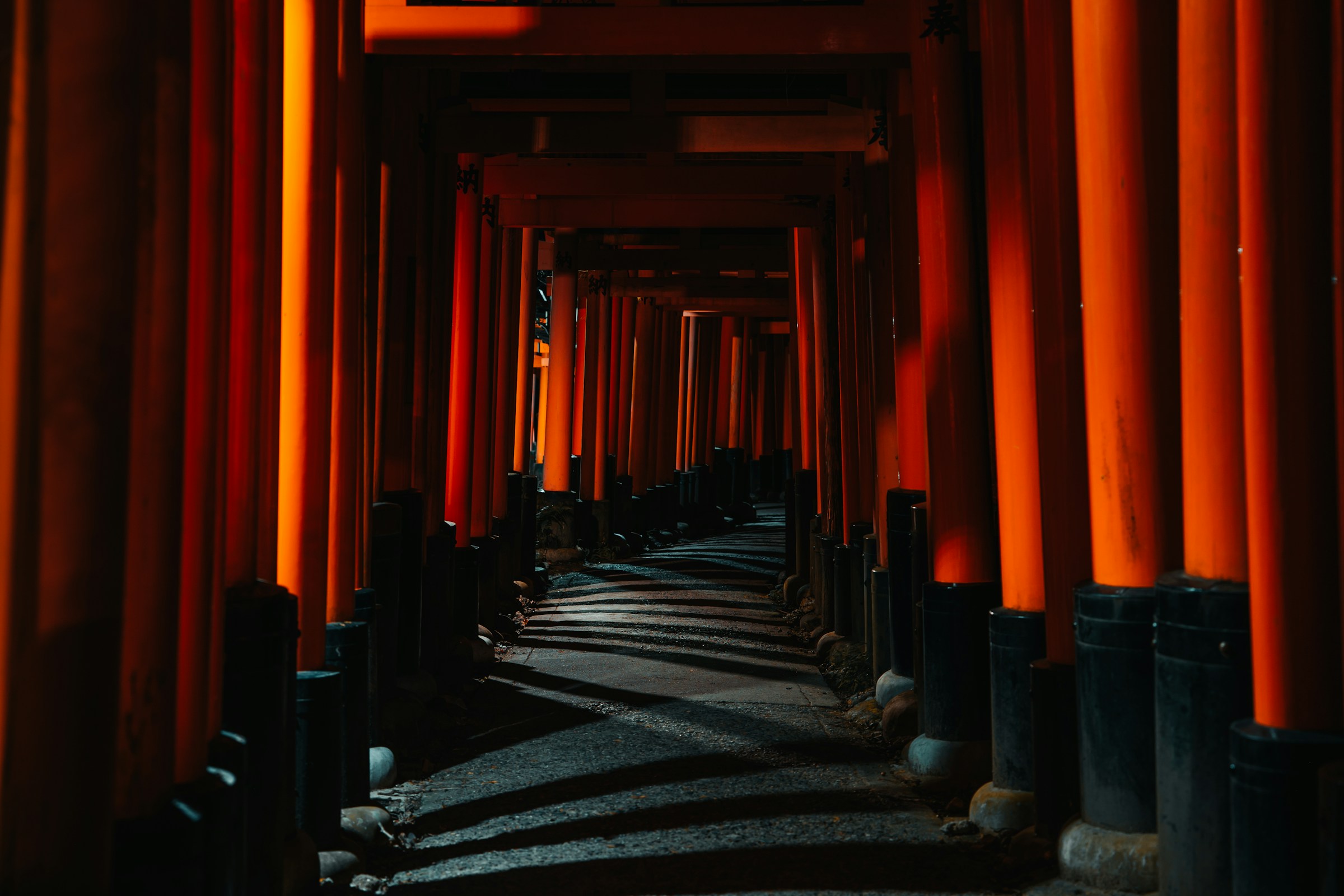
- Kyoto — temples, traditional wooden neighborhoods, and the country’s most photographed torii gates. A dedicated guide is coming; for now it’s covered inside our 7-day itinerary.
- Osaka — Japan’s food capital, and a good base for a Kyoto day trip if you’d rather stay somewhere with more nightlife.
What it costs
A realistic mid-range budget — private accommodation, a mix of casual and sit-down meals, city transport, and typical sightseeing — runs somewhere in the ¥15,000–20,000 per person per day range once you’re on the ground, before flights. It’s genuinely possible to do it for less: convenience store meals are good and cheap, capsule hotels and business hotels undercut Western city prices, and plenty of the best temples and neighborhoods cost nothing to walk through. It’s also easy to spend far more if a ryokan stay with kaiseki dinner is part of the plan, which is worth budgeting for separately rather than averaging in.
Food
The single most common mistake first-time visitors make is treating “Japanese food” as one category to check off, rather than a different specialty in every city worth chasing specifically — Osaka for okonomiyaki and takoyaki, Hokkaido for seafood and dairy, Hiroshima for its own distinct style of okonomiyaki, and Tokyo for basically everything else, sushi included. Convenience store food (konbini) is a legitimate part of this, not a fallback — a 7-Eleven egg sandwich at 2am has a real fan base for a reason.
Where to go next
This page is the overview. From here:
- Is It Safe to Travel to Japan? — the honest answer, plus the specific, narrow things actually worth being careful about
- Do You Need a Visa to Travel to Japan? — entry requirements by nationality, and what JESTA will change later
- Best Time to Visit Japan — a real season-by-season breakdown, not just “spring and autumn are nice”
- 7 Days in Japan: The Complete Itinerary — a full week planned out, plus the JR Pass math
- A First-Timer’s Guide to Tokyo — our existing deep dive on Japan’s biggest city
And if you’d rather have all of this — plus the depth we can’t fit into free articles — in one organized, offline-friendly guide, that’s exactly what our Japan Travel Guide is built for.
Planning a trip to Japan? See the full Japan travel guide, or get the complete Japan Travel Guide for offline itineraries and insider tips.

Destinations Editor at Travelcho, covering food culture, city guides, and budget travel across Asia and Europe.