Rome, Florence, and Venice in seven days is the itinerary equivalent of a greatest-hits album — not a deep dive into any one place, but a genuinely well-paced introduction to why people fall for Italy in the first place. This is that route done properly: enough time in each city to not feel rushed, and the real train logistics rather than a vague “take a train between them.”
The route: Rome (3 nights) → Florence (2 nights) → Venice (2 nights)
Days 1–3: Rome
Three full days is the minimum for Rome without feeling like you’re sprinting past the Colosseum — a full day for ancient Rome (Colosseum, Roman Forum, Palatine Hill, booked ahead to skip the standby line), a day for Vatican City (the Vatican Museums and Sistine Chapel take a genuine half-day, book a timed entry rather than showing up), and a day for the city at street level — the Pantheon, Trevi Fountain, Piazza Navona, and the Trastevere neighborhood in the evening, which has a noticeably different, less touristy energy after dark.
Days 4–5: Florence
The Rome–Florence high-speed train takes about 1 hour 25 minutes, with both Trenitalia (Frecciarossa) and Italo running the route — worth comparing both, since prices shift by time of day and how far ahead you book, with tickets starting around €15 if booked with some lead time. Two days in Florence covers the Uffizi Gallery and the Duomo (both worth pre-booked timed entry to skip lines that otherwise eat hours), a walk across the Ponte Vecchio, and — if a slower afternoon appeals more than another museum — a half-day trip into the Tuscan countryside for a taste of the region the city sits inside.
Days 6–7: Venice
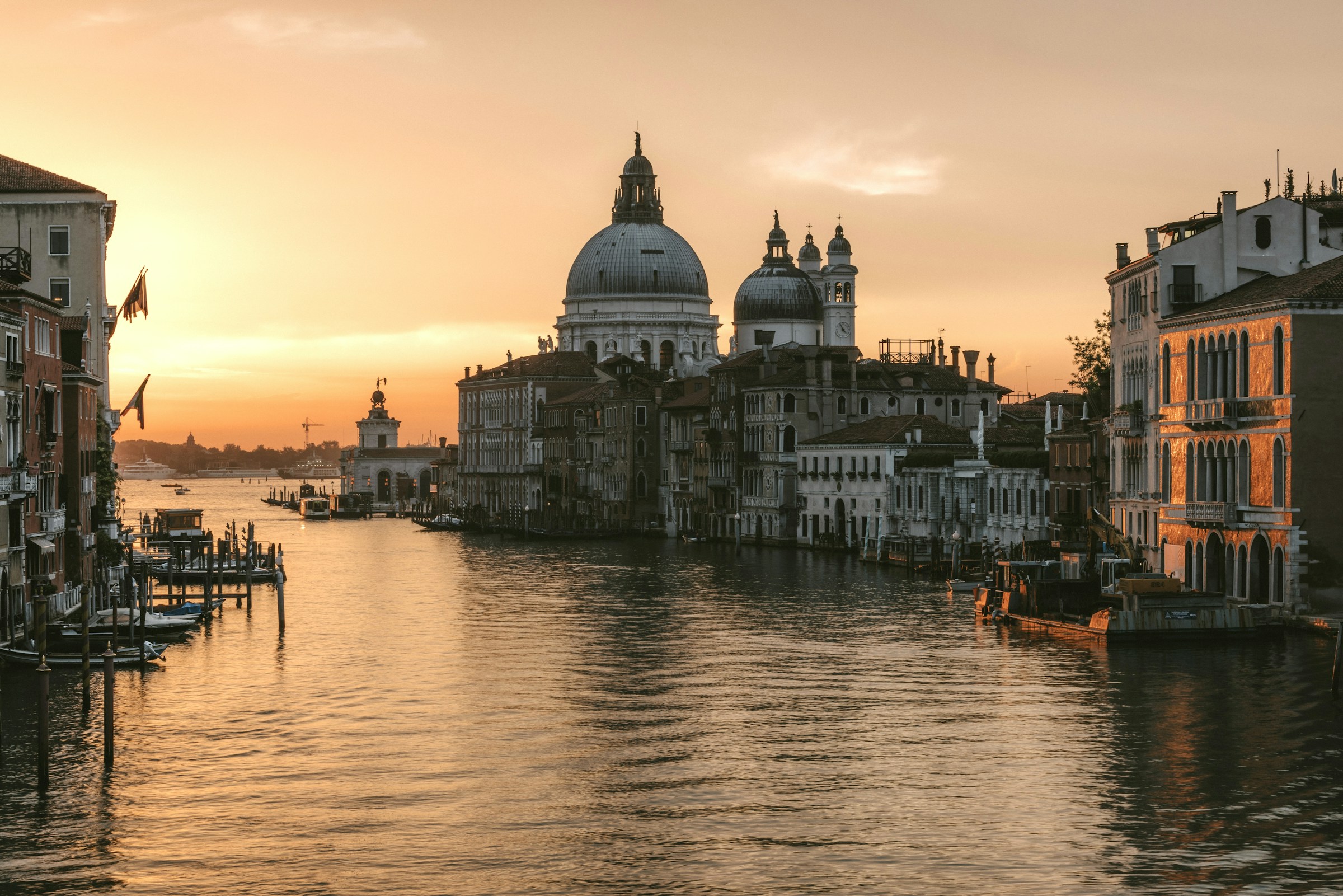
Florence to Venice runs about 2 hours by high-speed train, tickets starting around €19 with advance booking. Venice rewards slower travel more than any other stop on this route — getting deliberately lost in the smaller canals away from San Marco is a genuine, recommended activity, not just a cliché. Budget a half-day for St. Mark’s Square and the Doge’s Palace, and spend the rest of your time simply walking, with a vaporetto (water bus) ride down the Grand Canal at some point for the view alone. If time allows a day trip, the glassblowing island of Murano and the lace-making island of Burano (with its famously colorful houses) are both a short boat ride away.
The train math, since it’s genuinely simple here
Unlike some countries where a rail pass is worth real calculation, Italy’s high-speed network makes individual point-to-point tickets the clear default for this route — Rome–Florence and Florence–Venice together typically run somewhere in the €30–50 range per person if booked a few weeks ahead, well under what a multi-day rail pass would cost for just two train legs. Booking through Trenitalia’s or Italo’s own site or app directly (rather than a third-party reseller) is usually cheapest and gives you seat selection.
What this route actually costs
Rough per-person estimate for 7 days, mid-range travel style, not counting international flights: €700–1,000, covering accommodation, the two train legs, city transport, food, and the entry fees for the Colosseum, Vatican, and Uffizi (all worth pre-booking, both for skip-the-line access and because several sell out days ahead in peak season). It moves meaningfully lower leaning on aperitivo-hour dining and B&Bs over hotels, and higher the moment a Michelin-adjacent dinner or a private guide enters the plan.
Before you go
Two things worth sorting before booking: whether you need anything beyond a passport (most Western travelers don’t, under Schengen’s 90-day rule) and when to actually go — this exact itinerary plays out very differently in a packed, 35°C August than in a mild October week. For the fuller picture — including regions this itinerary deliberately leaves out — start at our Italy Travel Guide.
Frequently asked questions
Is 7 days enough for Rome, Florence, and Venice?
Yes, at the pace above — three days in Rome, two each in Florence and Venice is enough to see the essentials of each without a checklist sprint, though all three cities reward a longer stay if you have it.
Do I need to book a rail pass for this route?
No — for just two train legs (Rome–Florence, Florence–Venice), individual point-to-point tickets booked ahead are cheaper than any multi-day rail pass.
Should I book the Colosseum and Uffizi tickets in advance?
Yes, strongly recommended — both routinely sell out same-day slots in peak season, and pre-booked timed entry skips lines that can otherwise cost hours.
Planning a different trip? See 7 Days in Japan: The Complete Itinerary.
Also see 7 Days in Thailand.
Planning a trip to Italy? See the full Italy travel guide, or get the complete Italy Travel Guide for offline itineraries and insider tips.

Destinations Editor at Travelcho, covering food culture, city guides, and budget travel across Asia and Europe.