



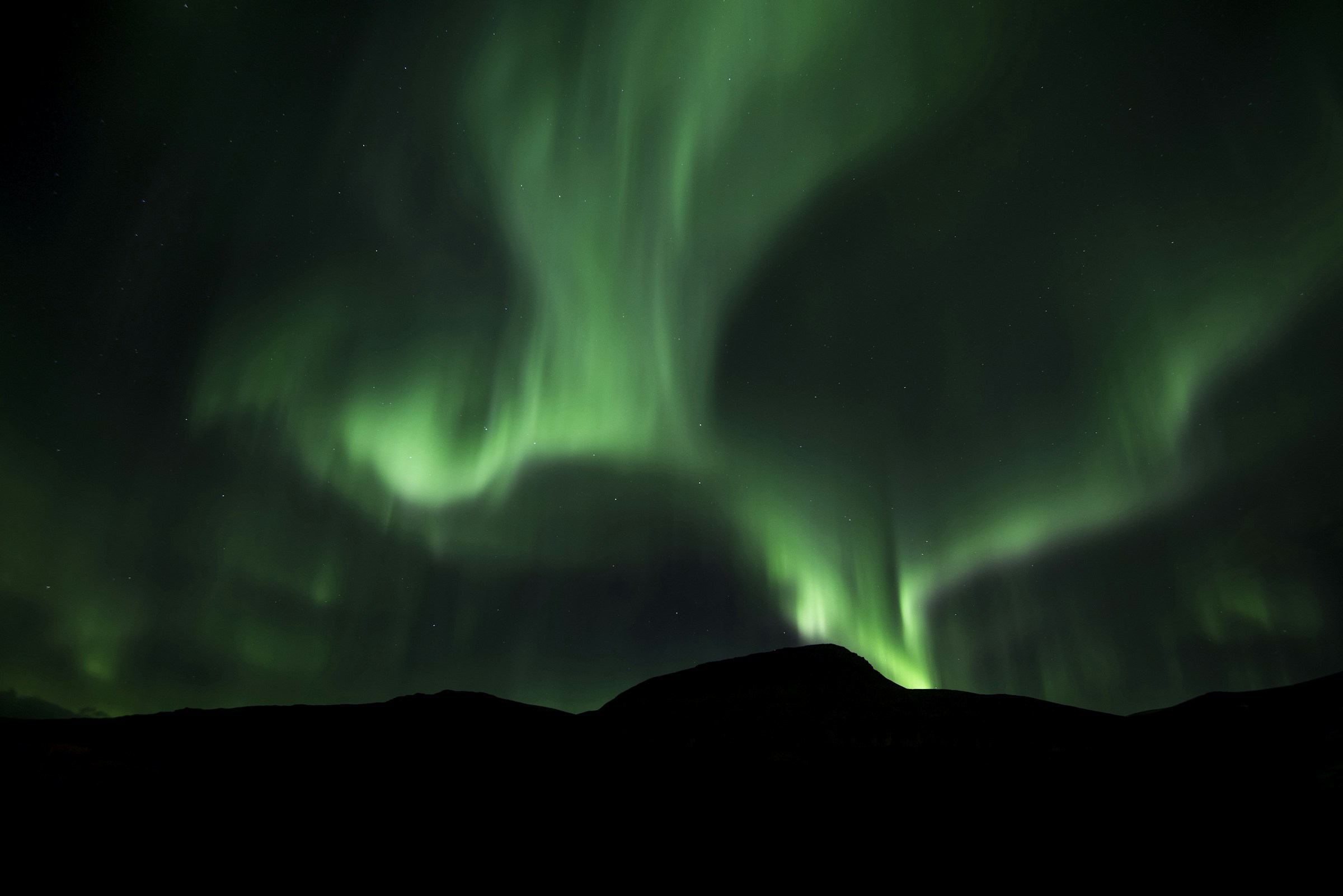
Every other destination in this guide has a “best season” that’s a matter of degree — better weather, fewer crowds, lower prices. Iceland is different: winter and summer aren’t points on the same scale, they’re two different trips built around two mutually exclusive experiences. Decide which one you want first; the exact month follows from that, not the other way around.
If you want the northern lights (roughly September–April)
The aurora requires real darkness, which rules out Icelandic summer entirely — the sky simply doesn’t get dark enough from late May through early August to see it, regardless of solar activity. Within the dark half of the year, deep winter (November–January) offers the longest, darkest nights, while late September–October and late February–March often bring more stable weather alongside still-good viewing odds. The best viewing window on any given night is typically 11pm–1am. Worth knowing for 2026 specifically: the sun’s 11-year solar cycle peaked around 2025, and elevated solar activity is persisting into 2026, meaning aurora odds are genuinely better than an average year — a 5–7 night stay with active, flexible-schedule hunting gives most winter visitors a real shot at a sighting.
If you want the midnight sun and full Ring Road access (June–August)
This is the season for round-the-clock daylight — up to 21 hours of light in June — every road open including highland F-roads, and the easiest, most forgiving driving conditions of the year. It’s also, unavoidably, when the aurora is invisible; the same bright skies that make a midnight hike possible make the northern lights unseeable. This is peak tourist season and peak pricing as a direct result.
The trade-off, stated plainly
There’s no genuine compromise month that delivers both a good shot at the northern lights and full summer road access — the two experiences are structurally opposed by daylight itself, not just weather variance. Choosing between them is the actual first planning decision for an Iceland trip, more consequential than picking an exact week within whichever season you land on.
Shoulder considerations
Late September and late April sit at the edges of both windows — some aurora visibility starting to return in September, some F-roads starting to reopen in late spring — genuinely useful if your travel dates are fixed by other constraints and you want a partial taste of both worlds rather than committing fully to either.
The short version
| If you want… | Go in… |
|---|---|
| The best shot at the northern lights | November–January (darkest), or late Sept–Oct / late Feb–March for more stable weather |
| Midnight sun and full Ring Road / F-road access | June–August |
| A partial taste of both | Late April or late September |
| Lower prices and thinner crowds (accepting limited road access) | Deep winter, outside major holiday weeks |
Whichever experience you’re building the trip around, the rest of the planning picture is in our 7-day itinerary, visa guide, and full Iceland Travel Guide.
Frequently asked questions
Can I see the northern lights in Iceland in summer?
No — the sky doesn’t get dark enough from roughly late May through early August, regardless of aurora activity levels.
What is the best month to see the northern lights in Iceland?
November through January offers the darkest, longest nights; late September–October and late February–March often add more stable weather alongside still-strong odds.
Is 2026 a good year for northern lights in Iceland?
Yes — solar activity remains elevated following the 11-year solar cycle’s 2025 peak, meaningfully improving aurora odds compared to an average year.
Weighing destinations? Compare with Best Time to Visit Thailand and Best Time to Visit Peru.
Also see Best Time to Visit Switzerland.
Planning a trip to Iceland? See the full Iceland travel guide, or get the complete Iceland Travel Guide for offline itineraries and insider tips.

Destinations Editor at Travelcho, covering food culture, city guides, and budget travel across Asia and Europe.