







Last verified: July 2026.
Violent crime isn’t the risk in Italy — you can walk through the center of Rome, Florence, or Milan at midnight without the unease you might feel in a similarly sized city elsewhere, and the homicide rate is among the lowest in Europe. The risk that’s real, specific, and worth actual preparation is theft, and Italy has a well-earned reputation as one of Europe’s toughest countries for it. That’s the whole article, essentially: not “is Italy dangerous,” but “how do pickpockets and scammers in Italy actually operate, and how do you not be an easy target.”
Pickpocketing: the number one risk, and it’s organized
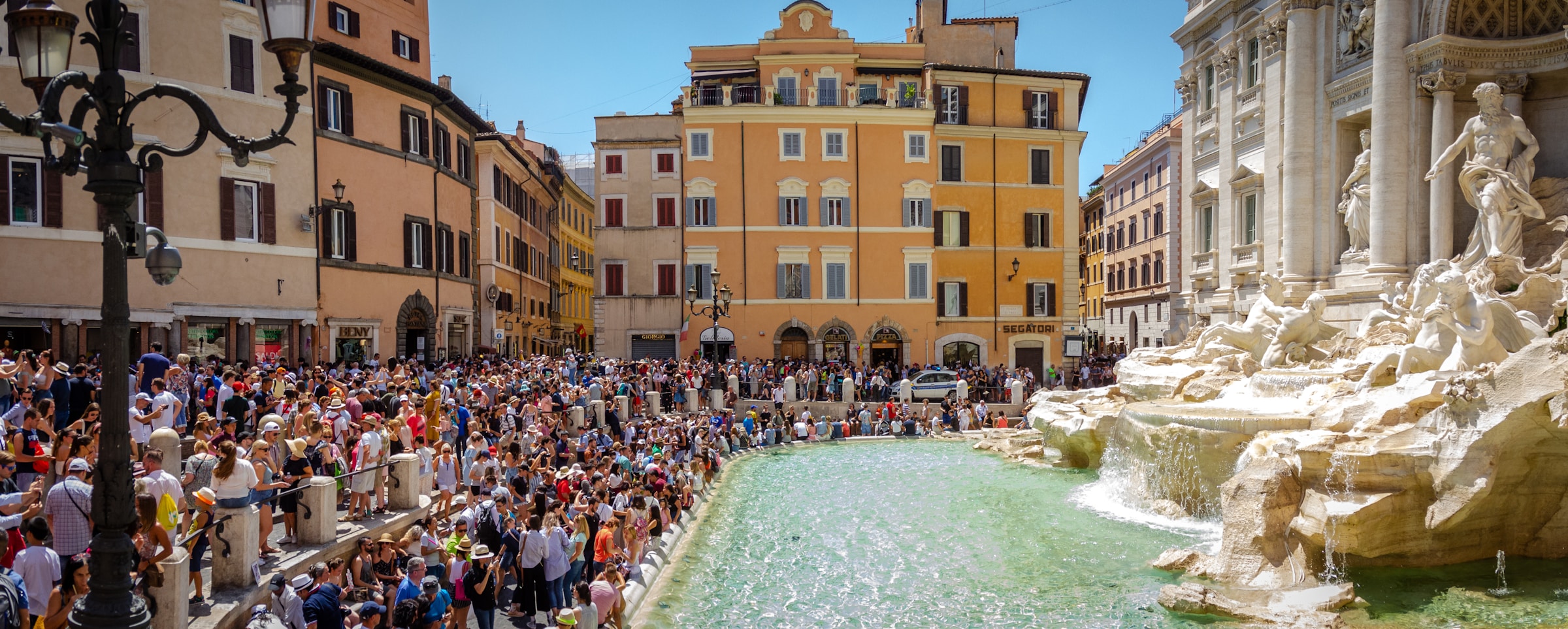
Italian data (from the national statistics institute) puts tourists at roughly 20% higher risk of theft than locals in major cities — not because tourists are careless exactly, but because pickpocketing in Italy’s busiest spots is a genuinely organized, practiced trade, not opportunistic teenagers. The places it concentrates are predictable:
- Rome: the area around Termini station, the Trevi Fountain, the Colosseum, and specifically bus route 64 — nicknamed, only half-jokingly, the “pickpocket express” for how reliably it gets targeted.
- Crowded transit generally — packed metro cars and train platforms are where a jostling crowd becomes cover, in Rome, Florence, Milan, and Naples alike.
- Any dense tourist landmark — wherever a crowd is looking up at something, someone else is looking at the crowd.
The actual defense is unglamorous and effective: a bag worn across the body and in front of you rather than on one shoulder or behind, a wallet never in a back pocket, zippers you can feel if someone’s working them. None of this requires paranoia — it requires the same basic awareness you’d already use on a packed subway anywhere.
The scams worth knowing by name
- The “free” bracelet or rose. Someone ties a bracelet on your wrist or hands you a flower, then demands payment the moment it’s on you. The move is simple: don’t accept anything handed to you unprompted on the street, full stop.
- The “broken meter” taxi. An unmetered or “broken meter” fare, a deliberately scenic route, a claimed night surcharge that doesn’t apply, or insisting you handed over a smaller bill than you did. Use a licensed taxi from an official stand or a reputable app, confirm the meter’s running, and know the standard fare range for your route before you get in.
- Scooter grab-and-run. Rare but real, mostly in Naples and parts of Rome — a bag or phone snatched by someone on a moving scooter. Keep bags on the building side of the sidewalk, not the street side, and don’t fight for a grabbed bag; it’s not worth the injury risk.
What isn’t a real risk
Natural disasters that make international headlines — Vesuvius, regional seismic activity — are not a practical concern for a standard trip; monitoring is extensive and there’s no meaningful day-to-day risk to a visitor. Solo travel, including solo women, is common and generally comfortable in Italy’s major cities and tourist regions, with the same big-city awareness that applies anywhere.
Practical habits worth having anyway
- Keep a photo of your passport and any visa/entry documentation on your phone, separate from the originals.
- Split cash and cards across more than one place rather than a single wallet.
- Save the European emergency number, 112, which works across Italy and the rest of the EU.
The bottom line
If personal safety from violent crime is what’s giving you pause, that’s not where the real risk in Italy sits. If you treat pickpocket-prevention as seriously as the data suggests you should — bag in front, wallet not in a back pocket, skepticism toward anything handed to you unprompted — you’ve handled the actual risk this country presents.
For the rest of the planning picture, see our visa guide, when to go, and full Italy Travel Guide.
Frequently asked questions
Is Rome safe to visit alone at night?
Yes, in the well-touristed central areas — the practical caution to have is around pickpocketing and scams, not personal safety from violent crime.
What is the biggest scam to watch for in Italy?
Pickpocketing in crowded tourist areas and transit is the single biggest risk by volume; the “free” bracelet/rose scam and inflated taxi fares are the next most common.
Is it safe to take public transport in Italy?
Yes — it’s safe in the sense of personal safety, but it’s exactly where pickpocketing risk concentrates, so bag awareness matters more on a packed metro or train than almost anywhere else in the country.
Comparing destinations? See how this stacks up against Is It Safe to Travel to Japan?.
Also see Is It Safe to Travel to Thailand?.
Also see Is France Safe to Travel?.
Also see Is Greece Safe to Travel?.
Also see Is Peru Safe to Travel?.
Also see Is Iceland Safe to Travel?.
Also see Is Switzerland Safe to Travel?.
Also see Is the USA Safe to Travel?.
Planning a trip to Italy? See the full Italy travel guide, or get the complete Italy Travel Guide for offline itineraries and insider tips.

Destinations Editor at Travelcho, covering food culture, city guides, and budget travel across Asia and Europe.