Bali’s weather calendar is more forgiving than most of this guide’s destinations — there’s no month that’s genuinely bad to visit, just a dry season that’s more reliable and a wet season that’s cheaper and greener. The one date that actually demands specific planning isn’t about weather at all: Nyepi, the day the entire island goes silent.
Dry season (April–October): the reliable default
Eight to nine hours of sunshine most days, stable temperatures around 27–30°C, and low rainfall define this stretch — the safest bet for a first trip built around beach time and outdoor activities without weather-related compromise. May, June, and September stand out within this window as the genuine sweet spot: the same reliable weather as peak season, with noticeably fewer crowds and lower prices than July and August.
Peak season (July–August): busiest and most expensive, for understandable reasons
The driest, most predictable weather of the year, overlapping with Northern Hemisphere summer holidays — expect the fullest beach clubs, busiest Ubud streets, and highest villa prices of the year. Worth it if your dates are fixed to this window regardless; worth avoiding on purpose if flexibility allows a shift to May, June, or September instead for a meaningfully calmer version of the same weather.
Shoulder into rainy season (October): still mostly dry, thinning crowds
October holds onto dry-season conditions for most of the month while crowds and prices ease from the August peak — a reasonable, underused window for travelers prioritizing value without much weather trade-off.
Rainy season (November–March): cheaper, greener, not a write-off
Rain during this stretch tends to arrive as dramatic but short afternoon downpours rather than constant grey — sun typically returns between showers, and the island’s rice terraces turn a genuinely more vivid green than during the dry months. Prices drop and crowds thin considerably. It’s a real, workable option for travelers who don’t need guaranteed all-day sun and want to see Bali at its most lush.
Nyepi: plan around it, don’t just note it
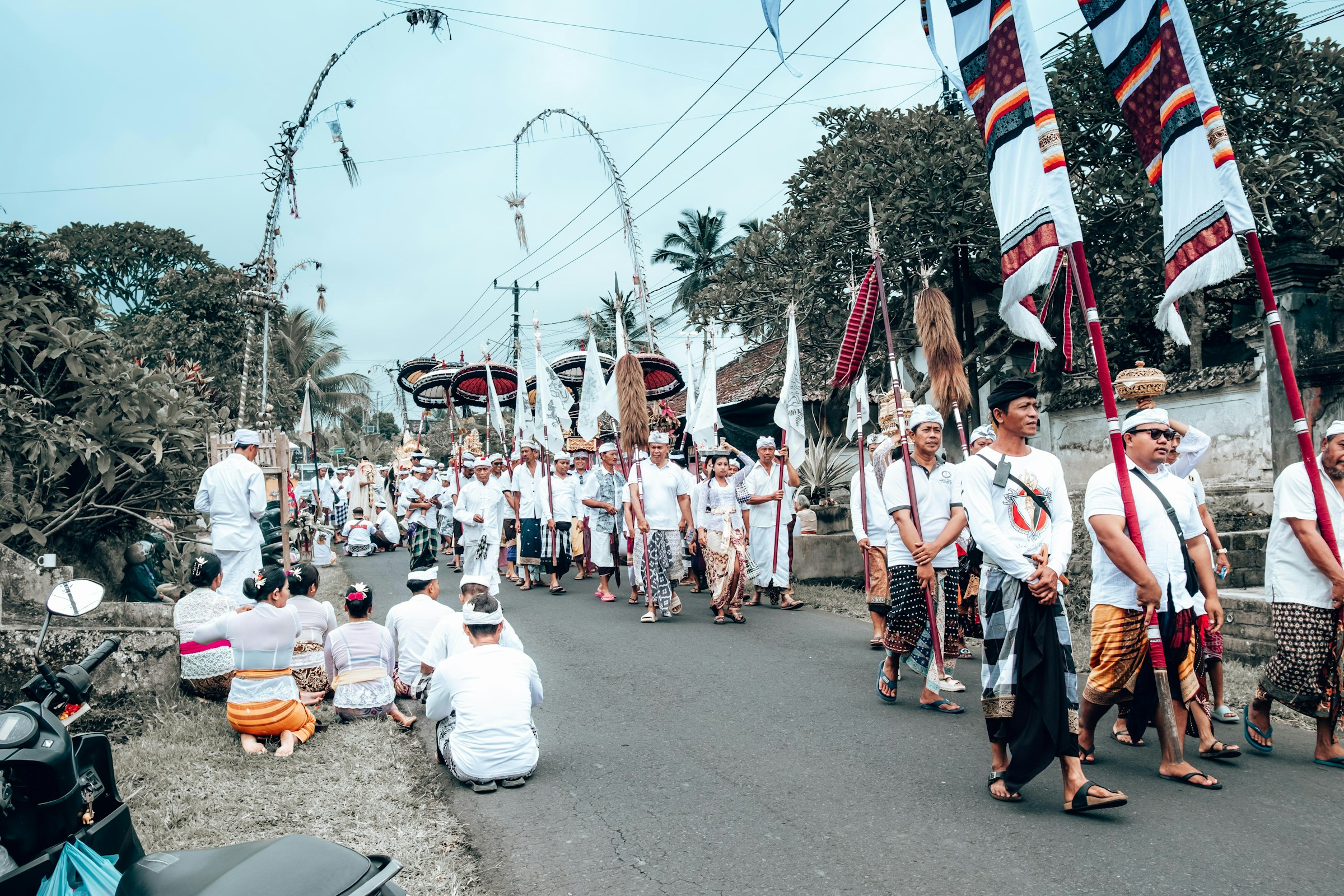
Nyepi (Balinese New Year, March 19, 2026) brings 24 hours of mandatory island-wide silence starting at 6am — the airport closes entirely, no vehicles are permitted on any road, and even hotel guests must stay quiet and largely indoors, enforced by local wardens. This isn’t a soft cultural suggestion to route around casually; if your travel dates land on or near it, plan explicitly rather than assume normal service. The days immediately before — Melasti purification ceremonies and the Ogoh-ogoh parades the night before Nyepi — are genuinely worth experiencing if timing allows, offering a far more visible, photographable cultural moment than Nyepi’s stillness itself. March and April more broadly (which also often include the Galungan and Kuningan festival period) are a strong window specifically for travelers prioritizing cultural depth over guaranteed dry weather.
The short version
| If you want… | Go in… |
|---|---|
| The best weather-to-crowd-to-price balance | May, June, or September |
| Guaranteed driest conditions (accept crowds and peak prices) | July–August |
| Lower prices, lush scenery, workable weather | November–March (expect short daily downpours) |
| Deep cultural immersion | March–April, around Nyepi, Galungan, and Kuningan |
| To plan around, not avoid entirely | March 19, 2026 (Nyepi) — check flights and hotel policy specifically |
Whichever window you land on, the rest of the planning picture is in our 7-day itinerary, visa guide, and full Bali Travel Guide.
Frequently asked questions
What is Nyepi and does it affect tourists?
Yes, directly — it’s a full day of mandatory island-wide silence, including a closed airport and no vehicles on the road, enforced for tourists and residents alike. Plan travel dates around it specifically.
Is Bali good to visit in the rainy season?
Yes, with realistic expectations — expect short, dramatic afternoon downpours rather than constant rain, alongside genuinely lower prices and thinner crowds.
What are the best months to visit Bali?
May, June, and September offer the strongest overall balance — reliable dry-season weather without July and August’s peak crowds and prices.
Weighing destinations? Compare with Best Time to Visit Thailand and Best Time to Visit Greece.
Also see Best Time to Visit Morocco.
Planning a trip to Bali? See the full Bali travel guide, or get the complete Bali Travel Guide for offline itineraries and insider tips.

Destinations Editor at Travelcho, covering food culture, city guides, and budget travel across Asia and Europe.