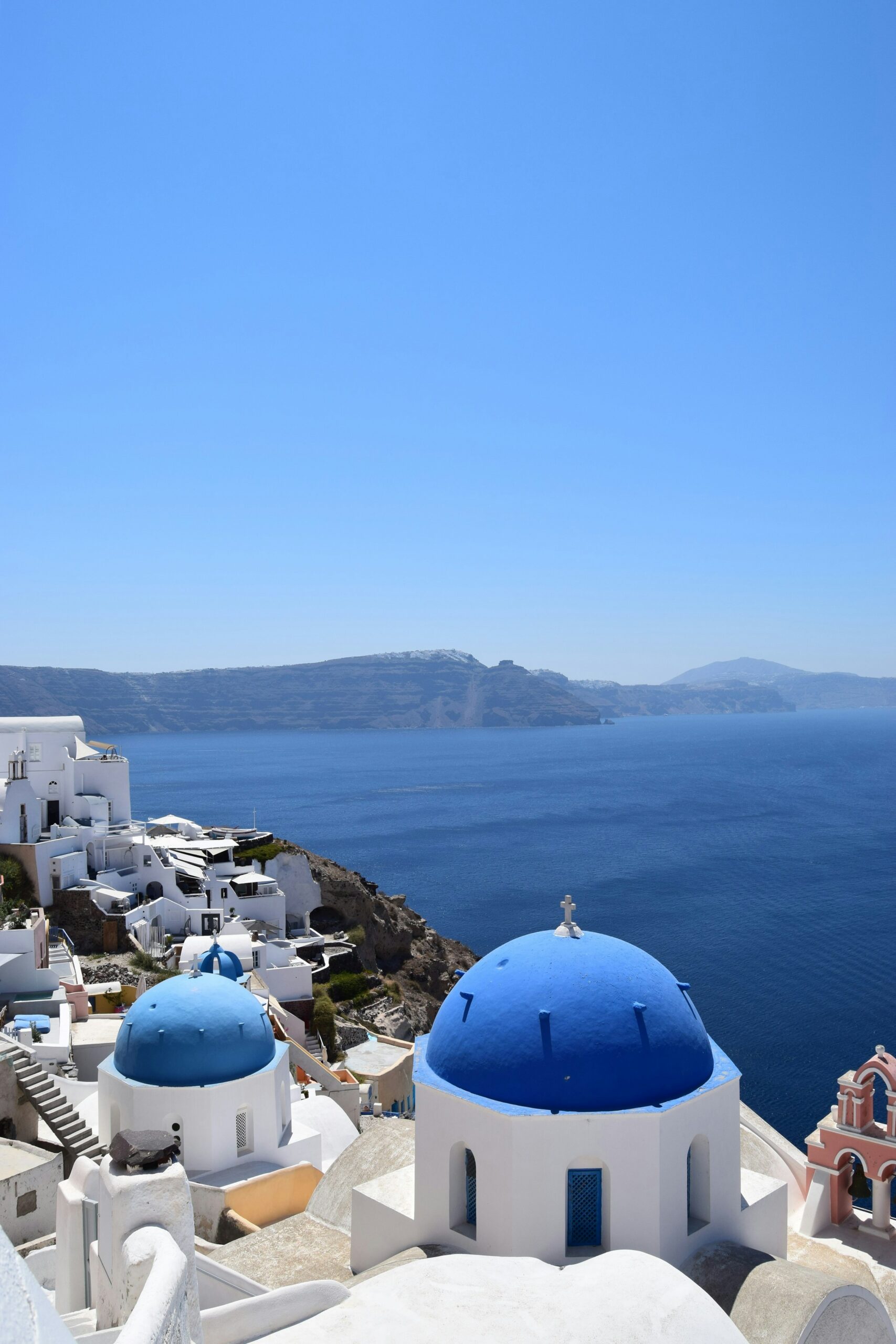
Greece has a planning trap unique among Mediterranean destinations: the islands you want to combine into one trip don’t all run on the same operating calendar. Ferries between the Cyclades — Santorini, Mykonos, and the rest — run frequently from roughly June through September and taper off sharply outside that window, with some routes not running at all in winter. Book a January “island-hopping” trip the way you’d plan an August one, and there may simply be no boat. This guide starts here because it changes the actual shape of a Greece itinerary more than almost any other single fact.
Quick Facts
- Currency: Euro (€). Cards work in most hotels and restaurants; smaller tavernas and island shops often prefer cash.
- Language: Greek. English is widely spoken in tourist areas, Athens, and the islands; less so in rural mainland areas.
- Plug type: Type C/F, 230V — bring an adapter.
- Visa: Greece is part of the Schengen Area — most Western passport holders enter visa-free for up to 90 days within any 180-day period. Full mechanics: Schengen Visa Guide; Greece-specific notes: our visa guide.
- Best general-purpose time to visit: June or September — full reasoning, including the wind pattern that catches people off guard, in Best Time to Visit Greece.
- Safety: low violent crime; pickpocketing on the Athens airport Metro line is the specific risk worth knowing. Details: Is Greece Safe to Travel?
Athens first, islands second
Most itineraries start in Athens for good reason — it’s where international flights land, and the Acropolis, Acropolis Museum, and the old Plaka neighborhood are worth two full days on their own before heading anywhere else. Our existing guide to the Greek islands picks up from there with island-by-island detail; our 7-day itinerary puts Athens and two islands together into one concrete route with real ferry times and prices.
The wind worth knowing about: Meltemi
From roughly June through September, and especially in late July and August, the Aegean gets the Meltemi — strong, sustained northern winds that can hit 25–35 knots at their peak. It doesn’t ruin a trip, but it’s worth knowing about for two practical reasons: high-speed catamaran ferries are more prone to cancellation in strong Meltemi conditions than larger, slower ferries, and choppy conditions can make an otherwise pleasant crossing genuinely unpleasant. Building in a spare day between island hops during peak Meltemi season is a real, practical hedge, not overcaution.
Getting around
Athens has an efficient Metro system connecting the airport, the city center, and Piraeus port, where most Cyclades ferries depart. Between islands, ferries are the standard — both slower conventional ferries and faster (but pricier, and more wind-sensitive) high-speed catamarans, bookable in advance through operators or aggregators. A rental car makes sense on Crete or the mainland, where distances are longer and public transport thinner, but is unnecessary and often impractical on smaller islands built around a compact main town.
What it costs
A realistic mid-range daily budget — private accommodation, a mix of taverna meals, inter-island ferries, and typical sightseeing — runs around €90–140 per person per day, with island accommodation (particularly Santorini and Mykonos in peak season) running noticeably higher than Athens or less famous islands. Ferry tickets between the major Cyclades islands typically run €45–90 each way depending on route and vessel speed — a real line item worth budgeting for explicitly on a multi-island trip, not an afterthought.
Where the rest of this coverage picks up
- Is Greece Safe to Travel? — the real risk, and exactly which Athens neighborhoods and Metro line to be more alert on
- Do You Need a Visa for Greece? — Schengen rules applied specifically to a Greece trip
- Best Time to Visit Greece — the Meltemi, ferry availability, and the real month-by-month picture
- Exploring the Greek Islands: Where to Go — our existing island-by-island guide
- 7 Days in Greece: The Complete Itinerary — Athens plus two islands, with real ferry logistics
And for the depth beyond a first trip — the islands this page can only summarize, and the etiquette and timing details that make the difference — that’s what our Greece Travel Guide is built for.
Planning a trip to Greece? See the full Greece travel guide, or get the complete Greece Travel Guide for offline itineraries and insider tips.

Destinations Editor at Travelcho, covering food culture, city guides, and budget travel across Asia and Europe.