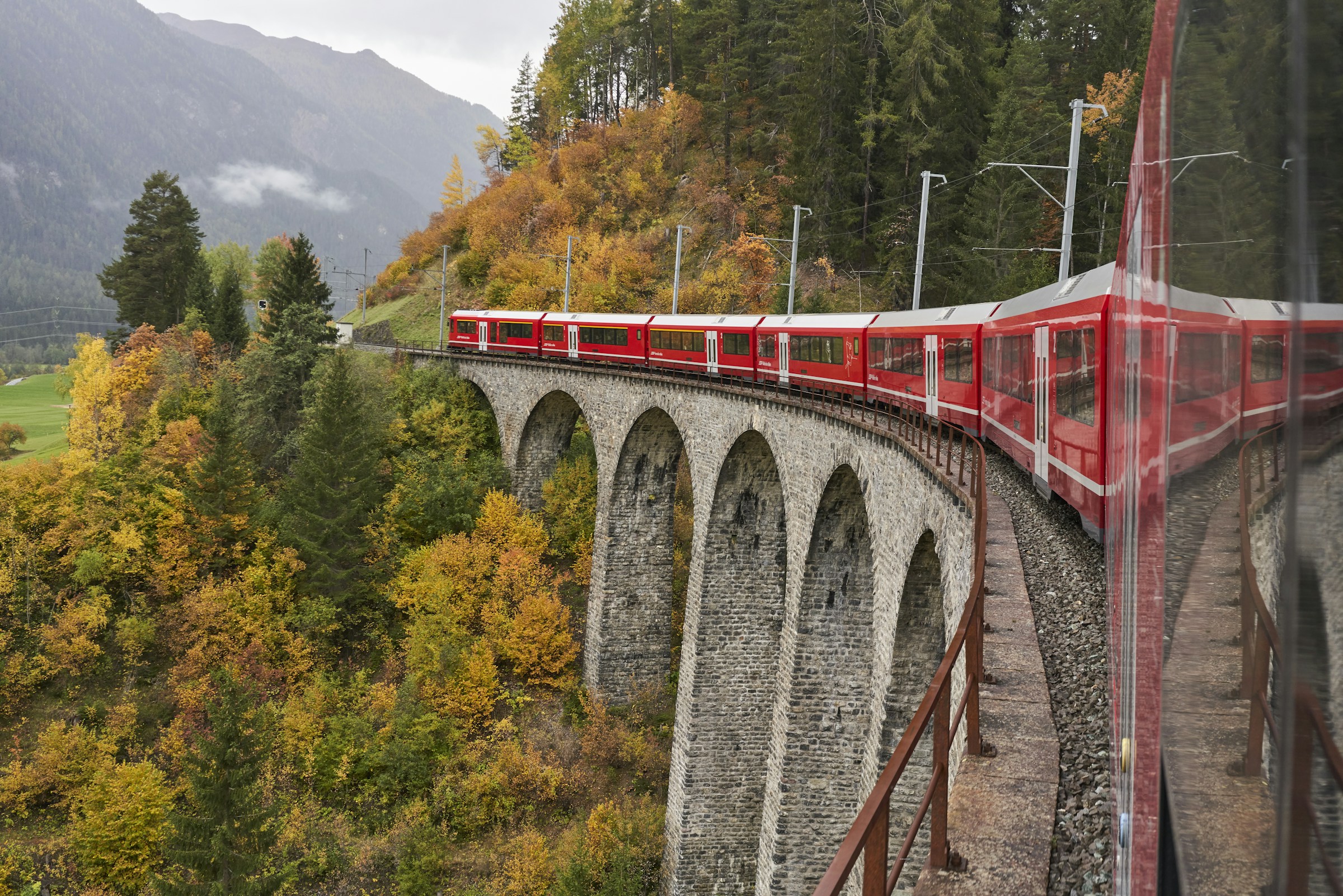
Switzerland runs on a kind of precision that shows up in small, specific ways: trains that connect with a two-minute margin and actually make it, a rail pass math problem worth doing before you buy rather than assuming, and mountain safety information that’s genuinely current and specific rather than a generic “be careful in the Alps” caveat. This guide is built around that same precision — real numbers, not comfortable generalities.
Quick Facts
- Currency: Swiss franc (CHF) — not the euro, despite being surrounded by eurozone countries and sitting inside the Schengen Area. Some tourist-facing businesses near borders accept euros, but budget in francs.
- Language: German, French, Italian, and Romansh, depending on region — Zurich and the northeast are German-speaking, Geneva and the west French-speaking, Ticino in the south Italian-speaking. English is common in tourist and business contexts nationwide.
- Plug type: Type J, 230V — a distinct three-pin plug most adapters cover but worth double-checking, since it’s not identical to the rest of continental Europe’s Type C/F.
- Visa: Switzerland is in the Schengen Area but outside the EU — most Western passport holders enter visa-free for up to 90 days within any 180-day period. Full mechanics: Schengen Visa Guide; Switzerland-specific notes: our visa guide.
- Best general-purpose time to visit: depends on skiing versus hiking — full breakdown in Best Time to Visit Switzerland.
- Safety: very low crime; mountain and avalanche conditions are the real, specific risk worth tracking. Details: Is Switzerland Safe to Travel?
Do the rail pass math before you buy
The Swiss Travel Pass covers unlimited travel on trains, buses, and boats across the country, free entry to 500+ museums, and 50% off most mountain cableways — genuinely good value for the right itinerary. The catch worth knowing now: as of 2026, the 6-day pass has risen to the point where it can cost more than buying individual tickets for a typical trip, a reversal of the “always buy the pass” advice that used to be safe to give. A 3-day pass on a route like Zurich–Lucerne–Interlaken–Zermatt–Zurich still saves real money; longer, less train-heavy itineraries are worth pricing both ways before deciding. The same principle that applies to Japan’s JR Pass applies here: check the actual route, don’t assume.
Where to go
- Zurich — the most common entry point, with a compact, walkable old town and the country’s best transit connections onward.
- Lucerne — lake, covered bridge, and mountain views without leaving a town center, a good first alpine taste for a short trip.
- Interlaken and the Jungfrau region — the base for the country’s most dramatic high-alpine scenery, and where most first-time hiking or ski trips actually center.
- Geneva — the French-speaking counterpart to Zurich, worth adding if Lake Geneva and a different linguistic region appeal.
What it costs
Switzerland is consistently one of the most expensive countries in Europe, on par with or above Iceland in this guide — a realistic mid-range daily budget, including accommodation, food, local transport, and typical activities, runs around CHF 250–350 ($280–390) per person per day. It’s genuinely possible to manage costs with grocery-store meals (Migros and Coop are the chains to know), hostels or budget hotels, and the Swiss Travel Pass math above done correctly — but this isn’t a destination to budget-travel casually without deliberate planning.
Where the rest of this coverage picks up
- Is Switzerland Safe to Travel? — current avalanche and mountain conditions, and what’s actually worth tracking
- Do You Need a Visa for Switzerland? — Schengen-but-not-EU rules applied specifically
- Best Time to Visit Switzerland — skiing versus hiking, and the shoulder-season sweet spot
- 7 Days in Switzerland: The Complete Itinerary — Zurich, Lucerne, and the Jungfrau region, with the Travel Pass math worked out
And for the depth beyond a first trip — the pass calculations for longer or more complex routes, and the regional detail this page can only summarize — that’s what our Switzerland Travel Guide is built for.

Destinations Editor at Travelcho, covering food culture, city guides, and budget travel across Asia and Europe.